
May 11, 2026, Secretary of War (SOW) Pete Hegseth convened a special review panel to conduct a comprehensive, long-term, department-wide review of every aspect of the military legal system impacting our servicemembers.
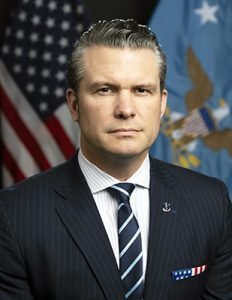
This review panel will allegedly enhance trust, strengthen the military force, drive real reform, and help ensure America’s warfighters receive the world-class military legal system they deserve.
Since we have been observing the military judicial system for the past fifty-two (52) years, the initiative put forward by SOW Hegseth comes as a breath of fresh air.
While we anticipate limited improvements, REAL military judicial reform will probably fall far short of what needs to be done.
Military brass feel they must have dictatorial control at all times. So if innocent people are railroaded into Ft. Leavenworth, they view it as the “cost of doing business.”
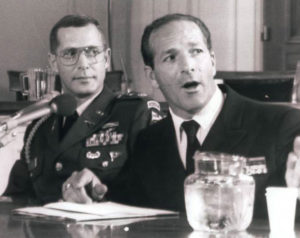
We vividly recall when the Navy threw Chief Petty Officer Michael Tufarillo in a military mental hospital to neutralize his whistleblower efforts when he discovered massive payroll fraud in the naval reserves.
CPO Tufariello testified on Capitol Hill and helped to pass the Military Whistleblower Protection Act (10 U.S.C. §1034).
The Military Whistleblower Protection Act prohibits reprisals against service members who make protected disclosures, either to Congress, an Inspector General (IG), or designated authorities regarding wrongdoing.
This includes abuse of authority, safety dangers, or mismanagement. (The Act was passed only after it was greatly watered down by the Pentagon of course).
The passage of the Military Whistleblower Protection Act was just for show. Virtually no one knows anything about it.
This includes virtually all American civilians plus 2.3 million active duty members of the military.
HISTORY REPEATS ITSELF
Once again, the military is doing the same thing with the Brandon Act of 2023. It applies to all service members in all branches of the military under the Department of War.
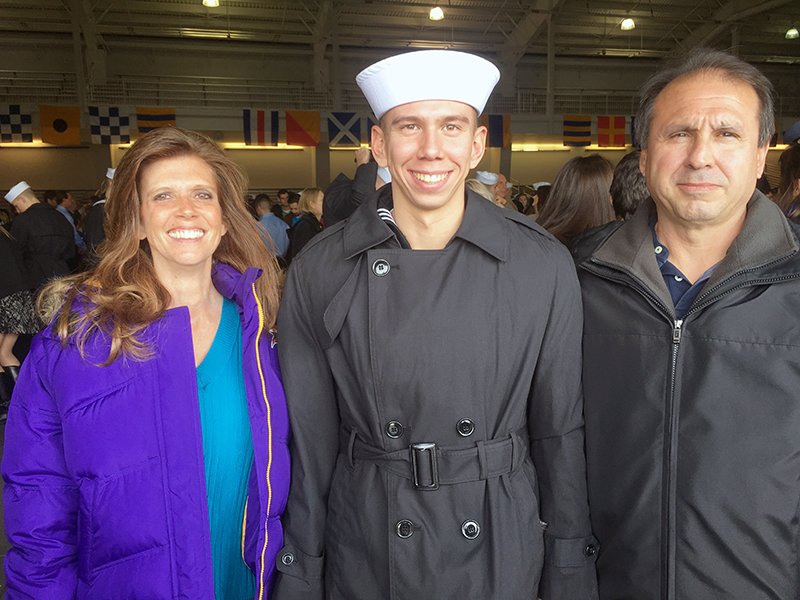
To this day, Teri and Patrick Caserta (parents of Brandon) continue hearing from service members and their families saying they were never told anything about The Brandon Act.
It’s suspected that many didn’t know it even existed until the saw or heard about Teri and Patrick Caserta.
The Pentagon isn’t telling service members about the new Brandon Act, because they probably don’t anyone to know about it. Or, they simply do not care.
Consequently, people have no knowledge of the Brandon Act, or are unsure how to use it. People may have been discouraged from invoking protections afforded under the Brandon Act.
Bottom line: The Brandon Act can only save lives if service members know the law exists, and are supported when they use it.
THE BRANDON CASERTA STORY
Let’s reexamine the tragic death of AE3 Brandon Caserta, the failure of leadership, and a military accountability crisis Congress still has not solved.
Aviation Electrician’s Mate Third Class (AE3) Brandon Caserta died while serving in the United States Navy.
He did not die in combat.
He did not die in an accident.
A distraught young man, feeling he had no other options, walked onto the flight line and jumped into the spinning tail rotor of an MH-60 helicopter in full view of fellow sailors and the chain of command responsible for his welfare, leadership, and protection.
That does not happen in a command that promotes a healthy atmosphere.
It does not happen in a functioning leadership environment.
And it does not happen without warning signs and there were many.

What was happening inside HSC-28 Squadron,
that drove a sailor to believe death was his only escape?

What emerged after Brandon’s death was not a single leadership failure, but a pattern of misconduct. For seven long years, Patrick and Teri Caserta have asked questions the Navy refuses to answer.
The pattern of misconduct involves the following…
- Toxic leadership complaints ignored
- Corrective actions ordered but never enforced
- Command climate warnings allegedly buried
- Witnesses intimidated into silence
- Contradictions between evidence and official findings
- Senior leaders promoted, transferred, or retired without accountability
Most disturbing of all, Congress responded by passing reform legislation — yet the military, especially the Navy, continues to operate as though compliance with the law is optional.
The Brandon Act became law because Congress recognized a deadly reality: service members sometimes fear their own chain of command more than the stigma of seeking mental health care.
Laws mean little when military leadership refuses to fully enforce them or even tell anyone about their rights under the law.
It’s a broader national issue.
Congress can pass legislation. Presidents can sign it. Families can spend years fighting for reform. Yet inside portions of the military bureaucracy — particularly within the United States Navy — accountability mechanisms routinely collapse behind closed doors.
The result is a system where:
- Command climate warnings can be ignored
- Investigative discrepancies can remain unresolved
- Witnesses can fear retaliation
- Toxic leaders can stay in power
- And careers can continue uninterrupted after catastrophic failure

In the civilian world, repeated warning signs preceding a death would trigger independent investigations, outside oversight, subpoenas, and public accountability.
Inside the military, families are too often met with silence, internal reviews, contradictory findings, and institutional self-protection.
According to the Caserta family, that is exactly what happened after Brandon’s death.
This article examines the unresolved questions surrounding HSC-28, the leadership failures alleged by the Caserta family, the contradictions within official investigations, and the larger constitutional question confronting Congress itself:
What is the value of military reform laws
if the armed forces can flagrantly ignore them without consequence?
Congress Passed the Law. The Military Still Controls the System.
The Brandon Act was supposed to change the culture that failed Brandon Caserta.
Passed by Congress and signed into law as part of the National Defense Authorization Act, the legislation created a confidential pathway for service members to request mental health evaluations outside their immediate chain of command.
The law addressed a problem Congress openly acknowledged:
Sometimes the chain of command itself is the danger.
Yet years after passage, service members and military families continue reporting that many troops remain unaware of their rights under The Brandon Act, uncertain how to invoke it, or fearful retaliation will still follow.

That raises a far larger issue than one tragic death.
Congress possesses constitutional authority over the Armed Forces. It writes the laws governing military conduct, oversight, funding, and accountability. But when military institutions fail to fully implement or enforce those laws — and face no meaningful consequence for doing so — oversight becomes performative instead of real.
No branch appears more resistant to outside accountability than the United States Navy.
Again and again, congressional hearings, inspector general findings, and military scandals reveal the same pattern:
- Internal protection of leadership
- Administrative deflection
- Reassignment instead of discipline
- Delayed investigations
- Quiet retirements
- Promotions despite unresolved failures
The Caserta family clearly describes how Brandon’s death exposed exactly that culture.
Not merely toxic leadership inside one squadron — but a systemic failure where preserving institutional reputation took priority over confronting the truth.
Because when laws are ignored, investigations become controlled exercises instead of accountability mechanisms.
And when accountability disappears, reform becomes public relations.

The Cost of Silence
Seven years later, the central questions remain unanswered.
Why were repeated warnings ignored?
Why were documented leadership concerns left unresolved?
Why did official findings allegedly conflict with evidence?
Why were witnesses reportedly intimidated?
Why were senior leaders allowed to retire, transfer, or advance without visible accountability?
And why does Congress continue tolerating a military system that can sidestep reform after reform with little consequence?
For Patrick and Teri Caserta, this has never been about revenge.
It is about truth.
It is about accountability.
It is about preventing another family from standing over a flag-draped coffin asking questions no parent should ever have to ask.
Because Brandon Caserta’s death was not simply about one sailor.
It exposed a deeper institutional problem:
A military culture where toxic leadership can survive oversight, where silence protects careers, and where accountability is often treated as optional.
Until that changes, the conditions that contributed to Brandon’s death may continue to exist elsewhere across the force.
And when they do, the cost is not measured in reports, transfers, promotions, or retirements.
It is measured in lives.
Related Links
Patrick Caserta on “Stories Of Service” (SOS) – by Theresa Carpenter
The Brandon Act
Brandon Caserta Foundation
Article source letter from Patrick and Teri Caserta
Our First article on the Brandon Caserta story

IMPORTANT:
If anyone referred to in this article feels they have been wrongfully characterized or maligned in any way whatsoever, we want to hear from you. We have no interest in publishing anything untruthful or misleading.
Our mission has been clear from the beginning, we only want to “Fight for the Truth and Expose the Corrupt.” We do this in the hope that we can fix what is broken.
Frequently, truth is elusive. We do our best to vet people, but we don’t have the badges, guns and subpoena power the military has to find the truth.
Sadly, the military tends to use their police power to suppress the truth in order to deceive Congress and the American people.
We therefore, rely on our readers to contact us to set the record straight. With your help, we can find the truth and make our military strong and credible. We believe in “Peace Through Strength,” but we only get our strength from our integrity.
If you are on active duty in the United States military and desire to blow the whistle on malfeasance, we caution you. GET OUT OF THE SERVICE FIRST, before blowing the whistle. Use your time in the service to SECRETLY gather hard evidence of the corruption you know about. Evidence could be photos, documents, audio, video, etc.

Remember, the entire military judicial system is designed to favor the government against you. Brass hats will not hesitate to manipulate the controlled judicial system to ruin you.
If you have not broken any law or regulation, the military will break the law to silence you. Remember also, the military has extraordinary administrative powers to punish you as well.
Instead of referring you to a court martial, they can convene a board of three officers to administratively separate you with an Other Than Honorable (OTH) Discharge. You can bet the three officers conducting a Board of Inquiry (BOI) will give the convening authority exactly what he/she wants.
If you’re smart, you’ll be quiet as a church mouse while on active duty, then contact us the moment you have received your DD-214. Do it early while all of the names, dates and events are fresh in your mind.
The smart play is to go-along-to-get-along until you are completely separated from the service.
If you feel the corruption is so severe and needs to be addressed immediately, we are listening and guarantee confidentiality. But for God sakes, don’t give us any information that can lead back to you. We know from decades of experience just how vile and vindictive the military can be.
Keep the faith and know that we are doing our best to protect our military members who just want the system to work correctly (and fairly).