THE KIT MARTIN CASE: ALLEGATIONS OF CORRUPTION AND NUMEROUS QUESTIONS
THAT KENTUCKY GOVERNOR ANDY BESHEAR MUST ANSWER
An investigation into disputed testimony, questions about evidence, a highly publicized airport arrest, and the integrity of Kentucky’s criminal justice system.
A staggering amount of corruption by Kentucky judicial and law enforcement officials produced the desired result. A quagmire of complicity resulted in a fraudulent indictment, a wrongful conviction and seven long years of incarceration for former Army Major Christopher “Kit” Martin.
CAN THE PUBLIC TRUST THE SYSTEM THAT CONVICTED KIT MARTIN?

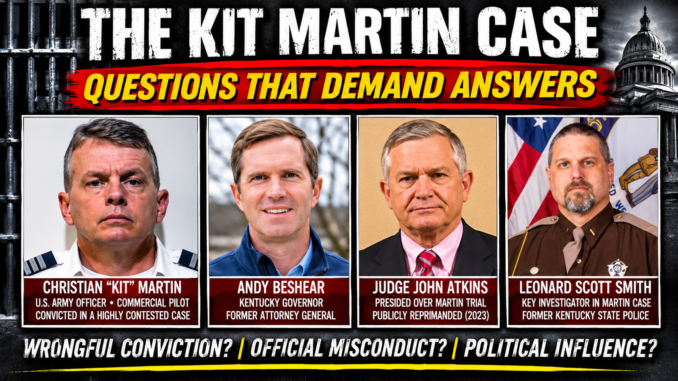
Christian “Kit” Martin, a former U.S. Army officer and commercial airline pilot, was convicted in 2021 of murdering three people in Christian County, Kentucky.
The victims—Calvin and Pamela Phillips and their neighbor, Edward Dansereau—deserve justice. Their families deserve the truth. And the public deserves confidence that the person convicted of these terrible crimes was convicted through a fair and lawful process.
MilitaryCorruption.com (MCC) believes serious questions remain about Martin’s investigation, indictment, prosecution, and trial.
Those questions involve the reliability of sworn testimony, the handling and presentation of evidence, the conduct of public officials, and the circumstances surrounding Martin’s arrest shortly before Kentucky’s 2019 Democratic gubernatorial primary.
Was Kit Martin convicted through a fair and reliable judicial process—or were serious irregularities overlooked in the pursuit of a conviction?
We believe these questions deserve independent examination.
MCC is not asking readers to accept every allegation presented in this article as an established fact. We are asking readers, witnesses, journalists, and appropriate oversight authorities to examine the underlying evidence and demand answers.
KENTUCKY’S TROUBLING HISTORY OF OFFICIAL MISCONDUCT
Kentucky has experienced documented controversies involving law enforcement conduct, public corruption, political accountability, and judicial ethics.
These matters cannot be dismissed simply because they are uncomfortable for public officials.
A particularly disturbing examination of alleged law enforcement misconduct appeared in The Gray Gods, a six-part investigative documentary series reported by Natalia Martinez for WAVE.
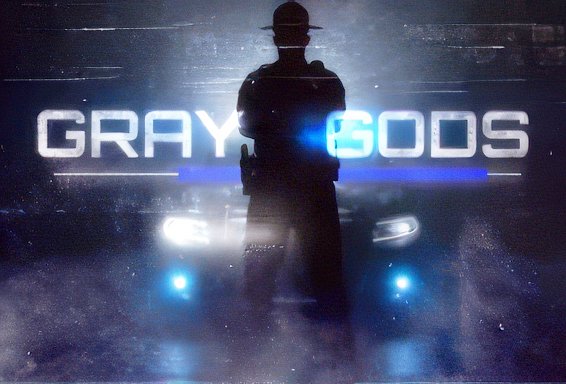
The series explores allegations and documented incidents involving Kentucky law enforcement officers, including troubling questions about excessive force, honesty, accountability, and institutional oversight.
We encourage readers to examine the series and evaluate its reporting.
However, misconduct in one investigation does not automatically establish misconduct in another. Each accusation must be evaluated on its own evidence.
That principle applies equally to the Kit Martin case.
If law enforcement officers, prosecutors, or judges violated their duties in Martin’s case, the public deserves to know. If the allegations are unfounded, the evidence should establish that as well.
LIEUTENANT LEONARD SCOTT SMITH — QUESTIONS ABOUT SWORN TESTIMONY
A central figure in the Martin investigation was Lieutenant Leonard Scott Smith.
Smith previously served with the Kentucky State Police and subsequently worked for the Christian County Sheriff’s Department.

According to information reviewed by MCC, Smith testified that his employment with the Sheriff’s Department was connected to the Martin investigation. The precise circumstances of that employment should be confirmed against the original testimony and personnel records.
MCC’s investigative review has raised serious concerns about the accuracy of statements Smith made under oath.
Those concerns are not based solely on secondhand allegations.
According to MCC’s investigative findings, comparisons of official police supplemental reports, grand jury testimony, and trial testimony have identified multiple material discrepancies.
MCC believes the evidence supports allegations that Smith knowingly provided materially false testimony under oath—conduct that, if all legal elements are established, would constitute perjury.
That is a serious accusation, and we do not make it lightly.
A discrepancy between two accounts does not automatically prove perjury. Criminal perjury requires proof of the applicable legal elements, including knowing falsity and materiality.
Nevertheless, MCC believes the discrepancies identified in this case are sufficiently serious to warrant independent examination.
The appropriate question is not whether a law enforcement officer’s testimony should be accepted because of his badge.
The question is whether that testimony withstands comparison with the contemporaneous evidence.
WAS THE GRAND JURY GIVEN AN ACCURATE ACCOUNT?
Martin was indicted by a Christian County grand jury on May 10, 2019.
The integrity of grand jury proceedings depends upon the lawful presentation of evidence and testimony.
MCC’s concerns extend beyond the accuracy of individual statements. They include whether the grand jury received a materially misleading account of significant investigative facts.
- Were statements presented to the grand jury consistent with official police reports?
- Were material discrepancies known to investigators or prosecutors?
- If discrepancies were known, were they corrected?
- Did the grand jury receive information that fairly represented the evidence?
- And were any significant facts omitted or mischaracterized?
These are questions that cannot responsibly be resolved through political statements or press conferences. They require examination of the original records, the applicable legal standards, and the conduct of the individuals involved.
EVIDENCE HANDLING AND THE RIGHT TO A FAIR TRIAL
MCC’s investigation has also raised concerns about the collection, handling, interpretation, and presentation of evidence used against Martin.
Among the matters requiring examination are allegations that certain evidence may have been improperly introduced, handled, or presented.
MCC believes some evidence warrants scrutiny for possible planting or fabrication. That is an allegation requiring independent verification, not an established judicial finding.
The distinction is essential.
Evidence that is mishandled may be unreliable. Evidence that is deliberately fabricated presents a far more serious issue involving potential criminal misconduct and constitutional violations.
- Were proper chain-of-custody procedures followed?
- Did the prosecution disclose material information required by law?
- Were witnesses’ statements accurately represented?
- Did the defense receive a fair opportunity to challenge questionable evidence?
- And did the jury receive an accurate picture of the facts?
The answers are central to evaluating the reliability of Martin’s conviction.
THE HIGH-PROFILE AIRPORT ARREST — WHO KNEW, AND WHEN DID THEY KNOW?

On Saturday, May 11, 2019, Christian “Kit” Martin was arrested at Louisville Muhammad Ali International Airport.
Martin was employed as a commercial airline pilot with PSA Airlines, a regional carrier operating flights for American Airlines.
Some accounts have suggested that Martin was arrested aboard an aircraft.
According to Martin’s firsthand account provided to an MCC investigator, that description is incorrect. He was arrested inside the airport terminal.
Martin described hearing a commotion and seeing approximately ten police officers running toward him with their weapons drawn.
Initially, he believed the officers were pursuing someone behind him.
He turned to look for the person they appeared to be chasing.
Then he realized that he was their intended target.
This is Martin’s account of the arrest. The precise number of officers, whether weapons were drawn, and the sequence of events should be checked against available recordings, police reports, and independent witnesses.
The arrest attracted significant news coverage. Passengers subsequently described their surprise at learning that a pilot associated with their flight had been arrested in connection with a triple homicide.
The public nature of the arrest raises legitimate questions about its planning and execution.
- Why was the airport selected?
- What public-safety considerations governed the decision?
- Who authorized the operation?
- And what prior arrangements, if any, were made with airport or airline personnel?
HOW DID KENTUCKY AUTHORITIES KNOW MARTIN WOULD BE THERE?
One of the most intriguing unanswered questions concerns how authorities knew Martin would be in Louisville on the morning of May 11.
According to information provided to MCC, Louisville was not a routine destination on Martin’s flying schedule. He reportedly traveled there only every few months.
If confirmed, that makes the timing of his arrest worthy of closer examination.
HOW DID LAW ENFORCEMENT KNOW THAT KIT MARTIN WOULD BE AT THAT PARTICULAR AIRPORT ON THAT PARTICULAR MORNING?
- Did investigators obtain his itinerary from PSA Airlines?
- Was a subpoena, court order, or other legal process involved?
- Did airline officials voluntarily cooperate with investigators?
- Could the itinerary have been obtained through other lawful sources, including information Martin himself had provided or ordinary investigative surveillance?
- When did law enforcement first learn that Martin would be in Louisville?
- Who received that information?
- And who decided to conduct the arrest at the airport?
MCC does not presently possess evidence establishing how authorities obtained Martin’s schedule. Nor has MCC established that a subpoena was legally required in these circumstances.
We are asking for the facts—not presuming an unlawful disclosure.
THE MYSTERY OF PSA AIRLINES FLIGHT 5523
Another potentially significant issue concerns what happened to Martin’s scheduled flight after his arrest.
Contemporary reporting identified PSA Airlines Flight 5523 in connection with the incident.
Removing a scheduled first officer immediately before departure presents an operational challenge for any commercial airline.
An airline may have several options, depending on the circumstances: assigning a qualified reserve pilot, delaying departure, canceling the flight, rebooking passengers, or transferring them to another aircraft.
MCC has received information suggesting that another pilot may have taken Martin’s place.
That account has not been independently verified.
We have also not established whether Flight 5523 departed late, was canceled, or whether passengers were transferred to another gate, aircraft, or flight.
A retired senior airline captain consulted about the circumstances explained that a rapid crew substitution could raise questions about whether arrangements had been made in advance.
That professional assessment is useful, but it is not proof of advance notification.
Airlines may have qualified reserve pilots available, and crew substitutions can occur for many ordinary operational reasons.
The crucial questions are factual:
- Was Flight 5523 delayed, canceled, or operated as scheduled?
- Did another first officer replace Martin?
- If so, when was that pilot assigned?
- Was a reserve pilot already available in Louisville?
- Were passengers transferred to another gate or aircraft?
- Did PSA Airlines have advance knowledge of the arrest?
- Were any arrangements made between law enforcement and airline personnel before May 11?
The answers may exist in crew scheduling records, flight operations logs, dispatch records, and contemporaneous communications.
If the airline knew an arrest was planned, that would not necessarily establish wrongdoing. But knowing when, how, and why such coordination occurred would help establish the true chronology.
THE EXTRADITION QUESTION
At the time of his indictment, Martin was reportedly residing outside Kentucky.
Had he been arrested in another state, interstate extradition procedures might have been required to return him to Kentucky.
By arresting Martin while he was physically present in Kentucky, authorities avoided the potential need for those proceedings.
This raises a legitimate question:
Was Martin’s presence in Kentucky simply an opportunity for a lawful arrest, or did avoiding extradition influence the decision about where and when to arrest him?
An extradition hearing generally addresses the legal authority to transfer a person between states. It is not ordinarily a trial of the underlying criminal allegations and does not automatically provide broad discovery into the prosecution’s case.
Therefore, MCC does not suggest that an extradition hearing would necessarily have exposed defects in the prosecution or prevented Martin’s conviction.
Nevertheless, the planning records and decision-making surrounding the arrest remain appropriate subjects for inquiry.
THE POLITICAL CALENDAR — TEN DAYS BEFORE THE PRIMARY
The chronology is striking.
Martin was indicted on May 10, 2019.
He was arrested the following day in a high-profile takedown at the airport.
This is curious because police knew the hotel where aircrews checked-in; why didn’t they arrest a so-called murderer in a safer environment at the hotel in a pre-dawn raid?
Kentucky’s Democratic gubernatorial primary was scheduled for May 21, 2019.
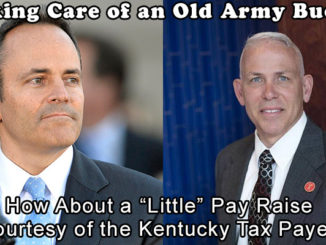
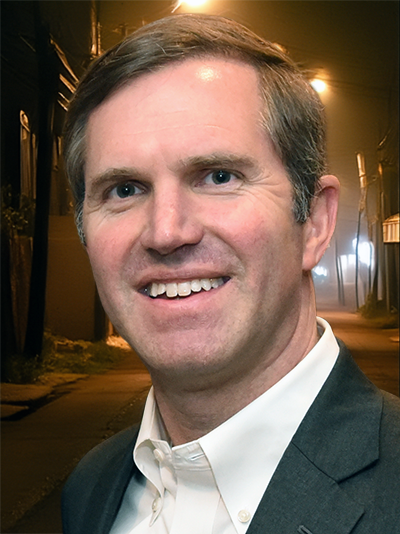
Then-Attorney General Andy Beshear was a candidate for governor in a very tight race. Three candidates were running neck and neck to win the nomination.
The race was so close that the advantage or lead shifted from one to the other. The real leader was virtually indistinguishable as the three candidates were heading towards the nomination “finish line.”
Only ten days separated Martin’s highly publicized arrest from the primary election.
That proximity warrants examination, but timing alone does not establish political interference.
There is an important difference between a prosecutor receiving favorable publicity from a legitimate criminal case and a prosecutor improperly influencing a criminal investigation for political advantage.
MCC wants to know whether the indictment and arrest were driven entirely by legitimate investigative and prosecutorial considerations.
Or, was the wrongful imprisonment of Kit Martin a diabolical plan for then Attorney General Andy Beshear to boost his stature in the polls in order to be viewed by the people of Kentucky as the “law and order” candidate?
- Who determined when the case would be presented to the grand jury?
- Who approved the arrest plan?
- What role, if any, did the Attorney General’s senior leadership play in those decisions?
- Were public announcements coordinated with campaign personnel?
- Did any political consideration influence the timing, location, or publicity surrounding Martin’s arrest?
- And what records support the answers?
No public official should use the criminal justice system as a political campaign instrument. Equally, no public official should be accused of doing so without evidence.
The public deserves an accurate accounting.
SERIOUS QUESTIONS THAT DESERVE HONEST ANSWERS
Andy Beshear served as Kentucky’s attorney general when Kit Martin was indicted and arrested.
His office’s involvement in the case raises serious questions about prosecutorial oversight and decision-making on legitimate matters of public interest.
MCC believes Governor Andy Beshear should address the following:
- What was the precise role of the Attorney General’s Office in the investigation and prosecution?
- When did the office assume responsibility for the case, and how was that responsibility documented?
- What significant investigative developments supported the decision to seek an indictment in May 2019?
- What involvement did senior officials have in planning the arrest and its public announcement?
- Were concerns about the accuracy of witness testimony or the handling of evidence raised within the office?
- If so, how were those concerns addressed?
- And will the relevant records be made available for appropriate independent review, subject to lawful restrictions?
MCC is not asserting that Beshear personally directed false testimony, fabricated evidence, or unlawfully manipulated the timing of the arrest. Such conclusions would require evidence establishing his knowledge and involvement.
But accountability requires more than simply asserting that the prosecution was legitimate. It requires a willingness to address specific, documented questions.
JUDGE JOHN ATKINS AND THE IMPORTANCE OF JUDICIAL ACCOUNTABILITY
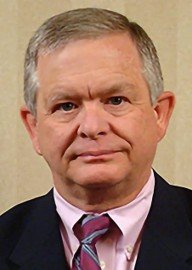
Judge John Atkins presided over Martin’s trial.
In 2023, the Kentucky Judicial Conduct Commission issued a public reprimand concerning Atkins’s conduct in other matters.
That disciplinary action is a matter of public record.
It does not, by itself, establish that Atkins committed misconduct during Martin’s proceedings or that Martin’s conviction was improper.
And there’s more…
It would seem that Judge John Atkins has a ‘Judge Roy Bean’ complex, believing he can do whatever he wants, violate whatever ethical standards or judicial canons he wants.
As Further evidence of the seemingly invincible and untouchable behavior of Judge Atkins, in December 2015, he sparked a major local controversy when he attempted to appoint his own daughter, Jill Riley Atkins, to the position of Christian County Master Commissioner.
https://www.kentuckynewera.com/ep/news/article_fc0175c3-2b18-5619-be8c-661cb18331e4.html
https://www.kentuckynewera.com/news/article_9905187e-a390-11e5-a127-b7b4457640de.html
https://www.kentuckynewera.com/news/article_d20f665c-a803-11e5-b59c-8f83baaf1ee1.html
Our coverage concerning Judge Atkins is not done. Eventually more information will be released. A reasonable person must ask; why is Judge Atkins still on the bench?
Nevertheless, it underscores why judicial conduct and adherence to established procedures are important subjects of public scrutiny.
MCC believes the trial record should be examined for the handling of disputed evidence, significant objections, witness testimony, and rulings that may have affected Martin’s ability to present a defense.
A fair trial requires an impartial judge, lawful evidence, effective adversarial testing, and proper respect for the rights of the accused.
Those protections are not technicalities.
They are the foundation of American criminal justice.
A BROADER CLIMATE OF CONCERN
The questions surrounding Martin’s prosecution arise against a backdrop of documented controversies involving Kentucky public institutions.
Investigative reporting, official disciplinary proceedings, criminal prosecutions, and academic research have examined various forms of corruption and misconduct in the Commonwealth.
Among the materials readers may wish to examine are Natalia Martinez’s The Gray Gods documentary series, Darlene Fitzgerald Price’s While No One’s Watching, and Emilio Corsetti’s I Will Ruin You, which addresses the Kit Martin case.
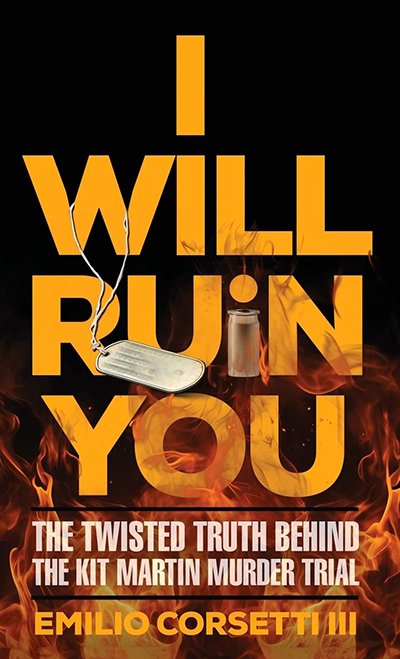
These sources differ in purpose, methodology, and evidentiary weight. Their conclusions should be evaluated individually.
The 2014 research associated with Harvard University’s Edmond J. Safra Center for Ethics, Measuring Illegal and Legal Corruption in American States, also provides context for understanding perceptions of corruption across state governments.
However, statewide corruption research does not establish misconduct by any particular individual in Martin’s case.
Nor does the existence of misconduct elsewhere establish that Martin was wrongfully convicted.
The Martin case must ultimately stand or fall on its own evidentiary and legal record.
HAVE FEDERAL LAWS HAVE BEEN VIOLATED?
MCC believes the allegations concerning sworn testimony, evidence handling, and official conduct deserve evaluation for possible violations of state or federal law.
Depending on the evidence, potential issues could involve perjury, obstruction of justice, evidence fabrication, or deprivation of constitutional rights.
Federal civil-rights statutes and obstruction provisions may apply in certain circumstances, but jurisdiction and the specific elements of each offense must be established.
The federal Racketeer Influenced and Corrupt Organizations Act, commonly known as RICO, imposes additional requirements involving an enterprise, a qualifying pattern of racketeering activity, and specified predicate offenses.
Allegations of multiple officials acting improperly do not automatically establish a RICO violation.
MCC’s position is straightforward: credible allegations of official misconduct should be examined under the laws that actually apply, without exaggeration or selective enforcement.
THE VICTIMS, THE CONVICTION, AND THE SEARCH FOR TRUTH
Three people lost their lives.
Nothing in this article diminishes the gravity of those murders or the suffering of their families.
Martin was convicted by a jury. That conviction remains a legal fact unless and until it is overturned or otherwise altered through lawful proceedings.
MCC questions whether the investigative and judicial processes that produced the conviction were honest and reliable.
Those two statements are not contradictory.
A conviction can be legally operative while serious questions about the underlying proceedings remain unresolved.
If Martin was wrongfully convicted, the consequences would be devastating—not only for him, but also for the victims’ families and the public.
If his conviction was properly obtained, an independent examination should be capable of addressing the concerns raised.
The goal must be truth, not the protection of reputations, institutions, or political careers.
A DIRECT APPEAL TO JOURNALISTS, WITNESSES, AND WHISTLEBLOWERS
MilitaryCorruption.com invites independent investigative journalists, legal scholars, former prosecutors, experienced homicide investigators, aviation professionals, and others with relevant expertise to examine the Kit Martin case.
We particularly welcome firsthand information that can be corroborated through records or independent witnesses.
SPECIAL REQUEST — MAY 11, 2019, LOUISVILLE AIRPORT ARREST
MCC seeks information from anyone who was present at Louisville Muhammad Ali International Airport when Kit Martin was arrested, including passengers, pilots, flight attendants, gate agents, dispatchers, crew schedulers, airport employees, and law enforcement personnel.
We are particularly interested in information concerning PSA Airlines Flight 5523, including its actual departure status, any cancellation or delay, crew substitutions, passenger transfers, and communications regarding the planned arrest.
We also seek contemporaneous photographs, video recordings, news broadcasts, operational records, and firsthand recollections.
Anyone who remembers the incident—even if they believe their information is insignificant—may possess an important piece of the chronology.
We do not want rumors presented as facts. We want information that can be checked.
PUBLIC NOTICE — RIGHT OF REBUTTAL — CONFIDENTIAL INFORMATION REQUESTED
MilitaryCorruption.com invites any individual or organization named in this article to submit a factual response, correction, rebuttal, or supporting documentation.
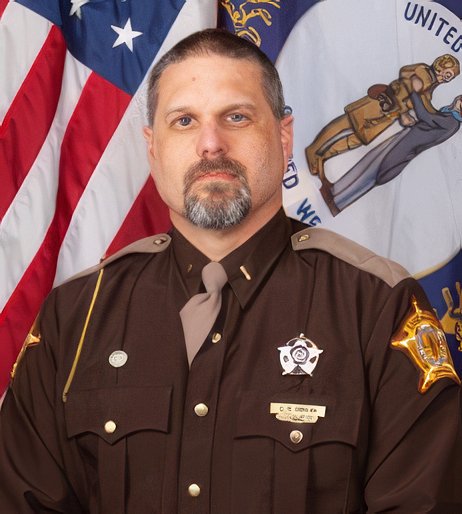
This invitation includes Governor Andy Beshear, Leonard Scott Smith, Judge John Atkins, representatives of PSA Airlines and American Airlines, and any law enforcement or prosecutorial agency involved in the case.
We will evaluate responses fairly and consider publishing substantive rebuttals, subject to reasonable editorial standards.
If we have made a factual error, we want to correct it.
If material information has been omitted, we want to examine it.
If anyone possesses evidence contradicting our concerns, we want to see it.
MCC also welcomes information from individuals who may fear professional retaliation or other consequences for speaking publicly.
We will take reasonable steps to protect confidential sources, discuss appropriate communication methods, and avoid disclosing identifying information without authorization, subject to applicable law and practical limitations.
We are interested in evidence, not political affiliation. We are interested in accountability, not personal revenge.
THE BOTTOM LINE
Christian “Kit” Martin’s case presents questions that should not be dismissed merely because a jury returned a guilty verdict.
MCC’s concerns include disputed sworn testimony, allegations involving evidence handling, the circumstances of the grand jury proceedings, the timing of the indictment, and the unusually public arrest of a commercial airline pilot shortly before a gubernatorial primary.
The airport arrest presents a particularly useful opportunity to establish additional facts.
Airline records, passenger accounts, crew scheduling information, and contemporaneous news coverage may help determine how the arrest was planned, who knew about it, and what happened to Martin’s scheduled flight.
We are not claiming to have answered every question.
We are insisting that the questions deserve answers.
If the investigation and prosecution were conducted properly, the record should support that conclusion.
If misconduct occurred, those responsible should face appropriate legal accountability.
And if Martin’s conviction was affected by material violations of law, the courts must have the opportunity to address them.
The integrity of the justice system requires nothing less.
MILITARYCORRUPTION.COM WILL CONTINUE ASKING QUESTIONS UNTIL THE FACTS ARE ESTABLISHED.
WE WANT THE TRUTH. THE WHOLE TRUTH. AND NOTHING BUT THE TRUTH.
MilitaryCorruption.com
SOURCES AND FURTHER READING
- Kentucky Judicial Conduct Commission — 2023 agreed order concerning Judge John Atkins
- Harvard-associated research — Measuring Illegal and Legal Corruption in American States
- Emilio Corsetti — Kit Martin case coverage
- Natalia Martinez — The Gray Gods documentary series announcement
- 2019 press conference concerning the Martin case
- While No One’s Watching — Darlene Fitzgerald Price
- I Will Ruin You — Emilio Corsetti
Editorial note: These references provide context and avenues for further examination. They do not independently establish every allegation discussed in this article.